

Inside This Article:
- A couple in Tennessee recently filed a lawsuit against a restaurant after allegedly being injured when decorative antlers mounted on a wall fell on them.
- The hospitality industry is seeing an increase in the frequency and severity of injury claims.
- Commercial General Liability (CGL) Insurance can respond to customer injury incidents but may not keep pace with rising verdicts, necessitating Excess Liability Insurance.
- Regular inspection and maintenance of decorative features can help reduce liability exposure for restaurant owners.
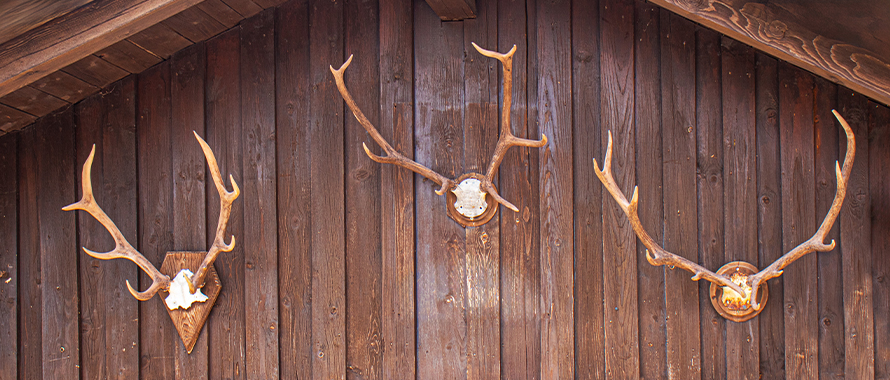
A couple has filed a lawsuit against a LongHorn Steakhouse after a decorative set of mounted taxidermied antlers allegedly fell from a wall and struck them while they were dining. The customers claim the incident left them with significant physical injuries and ongoing “mental anguish,” and they are each seeking $150,000 in damages, The Independent reported Feb. 24.
According to court filings, the couple argues the restaurant in the Nashville, Tennessee, suburb of Madison and its parent company, Orlando-based Darden Restaurants, failed to properly secure the wall decor and did not warn patrons of a potentially hazardous condition. The complaint alleges the accident has had lasting effects on the couple’s daily lives, including pain, diminished enjoyment of life, and strain on their relationship.
“Antlers can cause serious damage,” said Trudy Dahmer, Senior Underwriter, Commercial Insurance, Burns & Wilcox, St. Louis, Missouri. “I grew up where it is very common to have deer and antlers hanging up on the walls. Depending on the velocity and how high they fell from, it could be pretty bad.”

Antlers can cause serious damage. ... Depending on the velocity and how high they fell from, it could be pretty bad.
Premises liability incidents can carry significant financial consequences, including legal defense costs. Hospitality Insurance such as Commercial General Liability (CGL) Insurance can address these risks, but businesses must evaluate whether their limits are sufficient, said Nicholas Enriquez, Associate Managing Director, Burns & Wilcox, Brokerage Division, Scottsdale, Arizona. Excess Liability Insurance may be needed in many cases.
“Especially with the increase in lawsuits and verdicts that we are seeing, your CGL Insurance is often just not enough anymore on its own,” Enriquez said. “This story basically underscores why the Casualty Insurance market is difficult in the hospitality space, because accidents like this can happen.”

Especially with the increase in lawsuits and verdicts that we are seeing, your CGL Insurance is often just not enough anymore on its own.
Unusual hazards, escalating claims
According to The Independent, the Tennessee couple’s lawsuit alleges the antlers detached from the wall due to being improperly secured, resulting in “severe personal injuries and damages,” and that restaurant management “knew or should have known” of the potential hazard. It is not the first time that wall-mounted antlers have resulted in customer injuries; according to the publication, similar incidents have been reported in recent years, including cases in which falling taxidermy mounts caused severe eye trauma and head injuries.
“I think it is one of those very unfortunate events that you may not be able to fully expect,” Enriquez said, adding that mental anguish is increasingly being attached to lawsuit allegations. “When a claim involves a traumatic brain injury or mental anguish, it can be difficult to medically prove or disprove that, and you cannot really put a monetary value on that. It is driving up the cost of claims.”
More common customer injury claims for restaurants include slip-and-fall accidents, food-related hazards such as breaking a tooth when biting into food, and altercations — most often, he said, “the high-frequency, low-severity type risks,” though these can also turn into catastrophic losses.
“It is not out of the ordinary for an injury claim to cost several hundred thousand dollars to get settled or to go through court for it,” Dahmer said, explaining that CGL Insurance limits of $1 million or $2 million may not be sufficient. “When there are major medical expenses, it could end up going into the millions-of-dollars range, which is where Excess Liability Insurance could come into play. There is always that possibility, especially given the cost of everything these days and how high losses are going.”
It is not out of the ordinary for an injury claim to cost several hundred thousand dollars … When there are major medical expenses, it could end up going into the millions-of-dollars range.
Uninsured losses ‘could lead to closure’
According to the National Safety Council, falls were the leading cause of nonfatal emergency room visits in the U.S. as of 2023, accounting for 35% of all preventable nonfatal injuries. A slip-and-fall accident in a Target parking lot in Florida led to a $11.3 million verdict in November last year, and a restaurant in Texas was ordered to pay about $4 million in damages earlier in 2025 to two customers who were injured when a plate glass window shattered into their booth.
A nuclear or “thermonuclear” verdict “could lead to closure” for a restaurant, Enriquez said. “If a business is being sued for more than its insurance can pay, and they do not have enough money in the bank to pay that lawsuit, then they could ultimately go bankrupt because there could be a lien on their business,” he said. “That is really important to know.”
Smaller businesses could be particularly vulnerable, Enriquez said. “In many cases, they are lacking in Excess Liability Insurance,” he said, but they should be aware that claims can quickly turn into “seven-figure settlements,” especially when alcohol service is involved.
In many cases, [small businesses] are lacking in Excess Liability Insurance.
Restaurants that serve alcohol typically need to carry a separate Liquor Liability Insurance policy, Dahmer said. Assault and Battery Coverage may also be recommended.
“Liquor can be a big issue,” Dahmer said. “If someone steps foot out of a bar and gets into an accident, every bar they have been to that night usually gets pulled into the claim. If you have any liquor sales, it is always important to have Liquor Liability Insurance, as well as Excess Liability Insurance, so that there are no gaps in coverage.”
The role of maintenance and risk mitigation
The circumstances described in the recent lawsuit highlight the need for strong risk management within hospitality operations, including routine safety checks both indoors and outdoors, Enriquez said. Architectural features and decor should be regularly inspected to help minimize liability exposure.
“It is great to have that ambiance, but you are responsible for it. It needs to be part of the maintenance of your restaurant,” he said. “Just like checking your sidewalks for uneven surfaces, checking your wall decor and how things are anchored can be part of your risk management strategy.”
Dahmer also emphasized the importance of ongoing maintenance and vigilance. “Things have a tendency to come loose,” she said. “It is always good to double-check and make sure items are still secure.”
CGL Insurance and other Hospitality Insurance policies are not “one-size-fits-all,” Enriquez added. “Engage an agent or a broker who understands the hospitality market, the exclusions, and how to frame their risk with their underwriting partners,” he said. “Find that expertise in the marketplace.”