
Inside This Article:
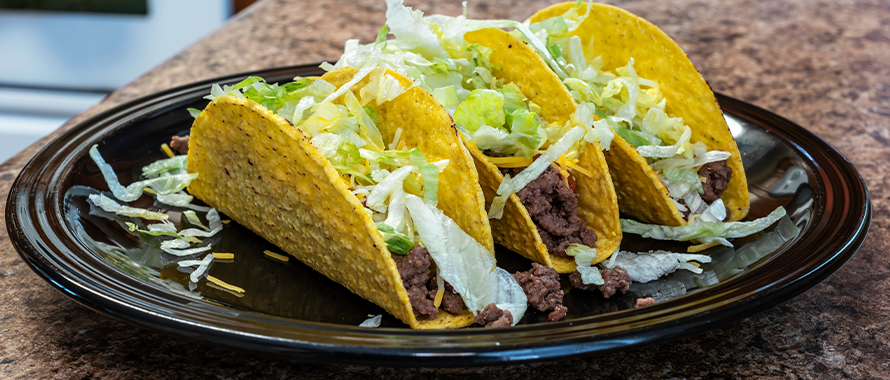
- A nationwide cyclosporiasis outbreak reportedly involving Taylor Farms lettuce served at Taco Bell has prompted multiple lawsuits.
- The outbreak has surpassed 22,000 confirmed or suspected cases across 47 states.
- Products Liability Insurance can help protect businesses against covered claims alleging bodily injury caused by contaminated food.
- Companies that produce or sell food are also encouraged to purchase Product Recall Insurance and review documentation protocols and contractual risk transfer.
Lawsuits are accumulating against Taco Bell, its franchisees, and lettuce supplier Taylor Farms as cyclosporiasis cases continue to rise nationwide. The litigation, which includes at least four personal injury claims from individuals as well as a proposed class-action lawsuit, began “within hours” of health officials linking lettuce from Taco Bell to the diarrhea-causing cyclospora parasite, Business Insider reported.
As of Aug. 4, 2026, the Centers for Disease Control (CDC) reported 10,468 laboratory‑confirmed cyclospora cases in 47 states, and 12,225 additional suspected cases. Michigan has been the hardest hit state and has reported two deaths linked to the outbreak.
The FDA has traced the outbreak to lettuce served at Taco Bell restaurants, prompting Taylor Farms to recall all iceberg lettuce sourced from central Mexico.
“This is extremely damaging,” said Connor Block, Broker, Commercial Insurance, Burns & Wilcox, Chicago, Illinois. “There is so much product that needs to get off the shelves, and the liability will probably be a full-limits loss given the sheer number of individuals affected and the size of this [outbreak].”

There is so much product that needs to get off the shelves, and the liability will probably be a full-limits loss given the sheer number of individuals affected and the size of this [outbreak].
When a product is alleged to have caused illness, claims can extend across the supply chain to manufacturers, distributors, retailers, and restaurants — and cause significant financial, legal, and reputational consequences for all involved. A company’s Products Liability Insurance can respond to claims alleging bodily injury, while Product Recall Insurance can help pay for expenses associated with removing potentially harmful products from the market.
“There are obviously thousands of consumers being impacted by this illness. It is the perfect example of why companies really need adequate Products Liability Insurance and, on top of that, Product Recall Insurance,” said Steve Bartell, Senior Broker, Casualty, Burns & Wilcox, Brokerage Division, Chicago, Illinois. “Those policies go hand-in-hand in situations like this.”
There are obviously thousands of consumers being impacted by this illness. It is kind of the perfect example of why companies really need adequate Products Liability Insurance and, on top of that, Product Recall Insurance.
When liability reaches franchisees
One of the first federal lawsuits stemming from the cyclospora outbreak named Pacific Bells, one of the country’s largest Taco Bell franchisees, while another named franchisee Charter Foods, Business Insider reported. Taco Bell Corp., Taco Bell America, Taylor Farms California, and Taylor Fresh Foods have also been named in the lawsuits, which seek compensation for missed work, pain and suffering, and other losses.
According to Block, how a franchisee’s insurance policies may respond to this type of lawsuit would typically depend on the contracts between the company and its suppliers. “There is probably some language in the contract between Taco Bell and Taylor Farms where, if the product is linked [to an outbreak], Taco Bell would have some recourse,” he said. “They could likely subrogate and get something back from them.”
Supplier agreements often require a restaurant to be named as an additional insured, which could obligate the supplier’s insurer to help defend or indemnify the restaurant against covered claims, Bartell said.
“Taco Bell may pay out, but it is likely going to go after Taylor Farms and say, ‘This was caused by your lettuce, so please reimburse us for these damages and lost income,’” he said. “Then Taylor Farms’ policy could potentially have to defend Taco Bell as well.”
Additional insured status can strengthen contractual risk transfer, but it can also expose the named insured’s policy and premiums to losses involving another business, Bartell said. Depending on the circumstances, both companies’ policies may respond while responsibility is addressed behind the scenes. It is important for franchisees and other food-service businesses to understand their coverage and the protection required of suppliers, Block said.
“Make sure your risk manager explores every option,” Block said. “The restaurant itself can be pulled into a lot of different problems that it may need help with, so keep all options open and get a full risk assessment.”
Protecting profits, brand reputation
Taco Bell’s U.S. same-store sales declined about 2% during the third quarter through July 27 as the outbreak affected customer traffic, though the company said sales have been “steadily improving,” CNBC reported July 30. The financial impact illustrates how negative publicity can reach franchisees even if their individual locations were not directly associated with any cases, Block said.
“The bigger issue with this now is the trade name aspect,” he said. “A franchise can purchase Trade Name Restoration Coverage, and even if your location was not impacted and never had any positive tests, you can still make a claim because the trade name has had this adverse publicity and it is certainly going to affect your profit.”
A franchise can purchase Trade Name Restoration Coverage, and even if your location was not impacted and never had any positive tests, you can still make a claim because the trade name has had this adverse publicity and it is certainly going to affect your profit.
While standard liability coverage generally does not reimburse a company for lost profits, a Product Recall Insurance policy may include coverage for adverse publicity and first- or third-party loss of profits, in addition to covering direct recall costs such as customer notification and product disposal.
“Products Liability Insurance is there to cover bodily injury and property damage, not financial loss of gross profits,” Bartell said. “That is where Product Recall Insurance, if the producer has coverage for third-party loss of profits, could potentially cover the financial impact of a recall.”
A franchise can also purchase specific Foodborne Illness Coverage that can respond when contamination is confirmed at a specific location, Block said. It can include coverage for loss of profits – after a waiting period – if the business must temporarily close.
“If it is confirmed that you served contaminated food and have to close the location, there is going to be a loss of profit,” he said.
Reviewing limits and exclusions
According to the FDA, Taylor Farms’ voluntary lettuce recall remains supported by “overwhelming epidemiological data” despite a recent false-positive test result. As of July 19, no product samples had tested positive for cyclospora, and the FDA’s investigation is ongoing.
Companies should know that not all food contamination events will be covered by insurance the same way, Bartell said. For example, intentional or criminal acts are often excluded, and some policies may contain bacteria or fungi exclusions. “If there is any sort of malicious intent, a lot of insurance policies will deny a claim because of that,” he said.
In order for recall expenses to be covered, Product Recall Insurance generally requires evidence that a product presents an immediate potential for bodily harm, danger, or failure, Bartell said. Limits also warrant close attention. “Companies need to look at whether they can sustain the business if a loss shuts them down for a while,” he said.
Companies need to look at whether they can sustain the business if a loss shuts them down for a while.
Excess Liability Insurance, which can provide liability limits above underlying policies, is typically recommended for food-related companies due to the risk of a large-scale loss, Block said. Maintaining supplier records, batch numbers, and other documentation that can help identify affected products is also important.
“If you are in the food space, look into every line of coverage you can,” he said. “When you are dealing with food and food service, there are several coverages that are very affordable and can be a big help in a situation like this.”