


Inside This Article:
- More than 1 in 10 U.S. homes were vacant in 2024, according to a recent census data analysis by LendingTree.
- Seasonal and recreational homes accounted for nearly one-third of vacant U.S. properties, while 2.6 million were available for rent and fewer than 800,000 were listed for sale.
- Property owners should inform their insurance carrier when a home becomes vacant, as standard Homeowners Insurance policies may restrict coverage after an extended period of vacancy.
- Checking on the home regularly and installing water-loss prevention devices can help homeowners reduce the risk of costly losses.
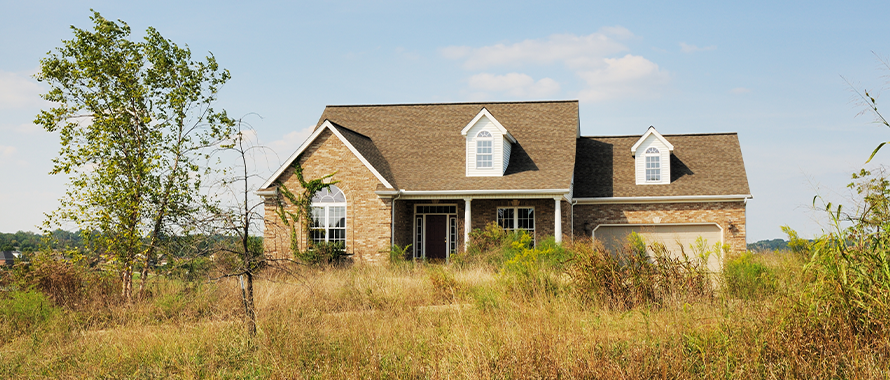
A burst pipe, break-in, or fire can become far more costly when no one is home to notice it. That concern applies to millions of properties across the U.S.; in fact, more than 1 in 10 homes, or 14.5 million properties, in the country are vacant, according to a recent LendingTree analysis of U.S. Census Bureau data from 2024. Of those homes, 4.7 million were used seasonally or recreationally, 2.6 million were available for rent, and less than 800,000 were listed for sale. The remaining vacant homes included properties that had been sold or rented but were not yet occupied, housing reserved for workers, and units held off the market.
The vacancy trends varied widely by location, the report found. Maine had the nation’s highest vacancy rate at 20.6%, while Connecticut had the lowest rate at 7%. Florida’s vacancy rate was 14.7%, but its roughly 1.5 million vacant units accounted for nearly as many as the other nine states with the highest vacancy rates combined, according to LendingTree.
“I am not surprised by it, but I am also a little disturbed by it,” said Brian Botwinick, Senior Underwriter, Personal Insurance, Burns & Wilcox, New York, New York. “Why are we not getting individuals in those homes? A lot of property owners are looking to rent their homes but sometimes that is tough, based on the location.”
An empty home can face risks such as frozen pipes, water damage, fire, burglary, vandalism, and unauthorized occupants — and the longer a problem goes unnoticed, the more extensive the damage can become. The financial impact can be compounded if the homeowner did not notify their insurance carrier that the property was vacant, said Sandy Reynolds, Underwriter, Personal Insurance, Burns & Wilcox, Kansas City, Kansas.
“A lot of Homeowners Insurance policies have a vacancy clause, so if a home is vacant for 60 days or more, for example, they may decline water-related coverage,” she said. “If this is the first time a property owner has had a vacant home, they may not be thinking about the insurance considerations at all.”
If this is the first time a property owner has had a vacant home, they may not be thinking about the insurance considerations at all.
Vacancy can change insurance needs
The national vacancy rate declined from 12.5% in 2014 to 10.1% in 2024, according to the LendingTree analysis. In Vermont, 75.8% of vacant homes were used seasonally or recreationally, representing 14.7% of all housing units in the state. In the District of Columbia, homes available for rent accounted for 39.4% of vacant units.
In addition to properties that are between tenants or used seasonally, properties could also be vacant because they are awaiting a sale, undergoing repairs, or held in probate. These circumstances can impact the type of Residential Property Insurance the homeowner may need and whether their existing Homeowners Insurance is still appropriate. A standard Homeowners Insurance policy is generally designed around an owner-occupied residence, Reynolds said.
“Homeowners often think they are covered and fine, but then renewal comes up and they say, ‘Oh, that is vacant,’” she said. “Every carrier has their different vacancy form, and that is what needs to be applied.”
When a home will be vacant, the owners should notify their insurance carrier as soon as possible. “Make sure that the underwriters know that it is vacant or going to be vacant and why,” Botwinick said. “If you own vacant property, what is your intent? That is always a question I ask. If it is an investment, that is fine. We just need to know about that.”
The right insurance solution may vary by carrier, the property’s condition, and how long the home is expected to be vacant. According to Reynolds, Dwelling Fire Insurance is often recommended for vacant properties. Depending on how the policy is structured, it can provide Actual Cash Value (ACV) Coverage or Replacement Cost Coverage, and some markets can offer three-, six-, or nine-month policy terms when an owner has a specific timeline for the vacancy, she said.
“If someone owns a house and is not doing anything with it, they have to look at their policy because there may be restrictions that eliminate coverage since the home is vacant,” Botwinick said. “They need to understand what they have and what is covered and not covered.”
Empty homes need active oversight
Earlier this year, NBC 7 San Diego reported on the growing problem of teens breaking into vacant properties for sale or rent in the area and throwing illegal parties, some of which caused thousands of dollars in damages to the homes. In April, a report from the New York City Department of Investigation showed that 548 vacant public housing apartments had been taken over by squatters over the past three years, WABC reported. Copper theft is another concern for vacant properties, Botwinick said.
“Thieves go in and start stealing copper wiring and copper pipes,” he said. “We have seen a lot of that kind of loss.”
A leaking appliance, faulty wiring, or a burst pipe that may be noticed more quickly in an occupied home can also lead to major losses. In cold-weather states, property owners should ensure pipes are drained and winterized, Botwinick said.
Low-temperature monitors and automatic water shutoff devices can be helpful investments, Reynolds added. “If water is flowing over a certain number of gallons, it will automatically shut off the water at the main line,” she said. “That is a huge deal.”
Fire and security systems, along with regular visits by the owner, a neighbor, or a property manager, are also recommended. “The more owners can do to help mitigate losses, the better,” Reynolds said. “You do not want to have to turn in a claim. If we all start doing a little bit more as homeowners to protect our assets, that can help reduce losses and, over time, help bring rates down. We are literally all in this together.”
The more owners can do to help mitigate losses, the better.
‘Full disclosure’ of property’s intent is key
Homeowners should keep their insurance carrier informed if plans change regarding a vacant property. For example, if a home was vacant pending a sale but is transitioned to a rental property, a rental package can be added, Reynolds said.
“We can do a primary, seasonal, or secondary home, with or without short-term rental,” she said.
That level of communication can help prevent surprises following a loss. “Full disclosure about what is going on with the property is important. The intent of the property might change, and if it does, tell your insurance professional,” Botwinick said. “At the end of the day, if you did have a loss, you do not want to have any surprises.”