


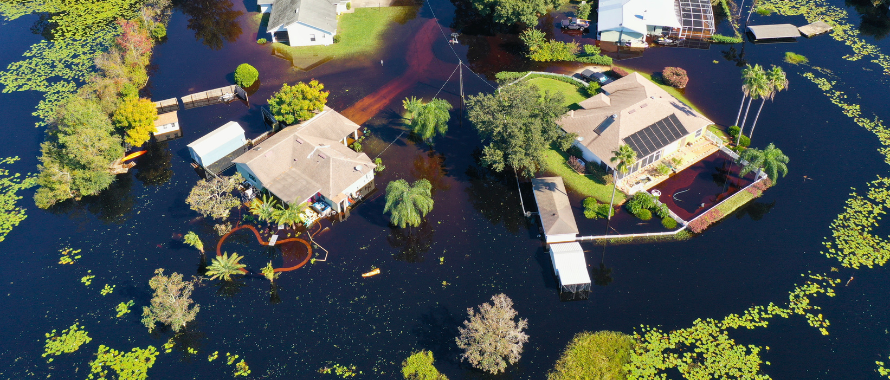
Flood events have surged over the past decade, putting many Residential and Commercial properties, including those outside of traditional flood zones, at risk. Parametric Flood Insurance provides data-driven, trigger-based financial protection for certain exposures, while Traditional Flood Insurance remains a foundational coverage for many property owners. Each product serves a distinct role and can be used independently or together to support a more comprehensive flood risk strategy.
Traditional Flood Insurance, including Primary & Excess solutions available within the Excess & Surplus (E&S) space, is designed to cover physical damage to structures and contents, satisfying lender requirements and providing repair or replacement cost coverage after a covered flood event. Burns & Wilcox places Traditional Flood Insurance through private market carriers, offering policies that provide broader coverage and higher limits than those typically available through the National Flood Insurance Program (NFIP).

Parametric Flood Insurance is highly flexible. It can provide coverage for hard-to-place locations, such as Florida and coastal areas, and can include assets such as docks and bridges, which are typically excluded from traditional Flood policies.
Parametric Flood Insurance offers a trigger-based payout that can supplement traditional policies by addressing coverage gaps, high deductibles, or indirect impacts such as access issues, loss of income, or business interruption where physical damage thresholds are not met or where traditional coverage may not respond.
The chart below provides a high-level, at-a-glance comparison of Parametric and Traditional Flood Insurance policies. It is intended as a conversation starter and resource to help guide discussions with clients about coverage options. It is not comprehensive and should not replace a full policy review or professional advice.
Frequently Asked Questions:
1. Does Homeowners Insurance cover flood damage? Standard Homeowners Insurance policies typically exclude flood-related water damage. Without a separate Flood Insurance policy, property owners are responsible for covering repairs, replacement costs, and cleanup expenses out of pocket.
2. How is Flood Insurance different from water damage coverage? Flood insurance covers direct physical loss caused by the inundation of normally dry land by floodwaters. This includes events such as surface water runoff, rising waters, storm surge, mudflow, and the overflow of inland or tidal bodies of water. Standard property insurance policies may cover certain types of water damage originating within a building, such as a burst pipe or accidental discharge from a plumbing system. However, damage caused by flooding from external sources is typically excluded and requires a separate Flood Insurance policy.
3. I do not live in a flood zone—why would I need Flood Insurance? Flooding is the most frequent type of natural disaster and can happen anywhere. According to FEMA, about 40% of Flood Insurance claims come from outside high-risk flood zones. Even a few inches of water can cause catastrophic damage, disrupt operations, and leave homeowners and business owners facing massive repair expenses.
4. Are there options beyond the NFIP for Flood Insurance? Yes. Private Flood Insurance solutions are also available and continue to expand. These offerings often provide broader coverage options, higher limits, and greater flexibility compared to National Flood Insurance Program (NFIP) policies.
5. What is Parametric Flood Insurance? Parametric Flood Insurance provides trigger-based financial protection based on measurable data, such as water depth or satellite-observed flooding, rather than physical damage assessments. It can help address coverage gaps, speed recovery, and complement traditional Flood Insurance, which typically covers direct damage to property.
Key Takeaway:
Parametric Flood Insurance and Traditional Flood Insurance serve different functions. Traditional Flood Insurance typically provides the primary foundation of coverage and satisfies lender requirements, while Parametric Flood Insurance can supplement that protection by offering additional financial flexibility and faster access to funds for specific, predefined exposures. Used together, they can support a more comprehensive approach to flood risk.
This commentary is intended to provide a general overview of the issues contained herein and is not intended, nor should it be construed, to provide legal or regulatory advice or guidance. If you have questions or issues of a specific nature, you should consult with your own risk, legal, and compliance teams.