

Inside This Article:
- Many homeowners affected by the Los Angeles wildfires last year have been unable to rebuild after realizing their insurance limits are not sufficient for current rebuilding costs.
- Rising construction expenses and high demand following disasters are increasing the risk of underinsurance nationwide.
- Inspections, valuation updates, and reviews of limits, endorsements, and home upgrades can help prevent coverage gaps.
- Owners of high-value homes are encouraged to review their Homeowners Insurance coverage and consider risk mitigation upgrades to ensure their assets are protected.
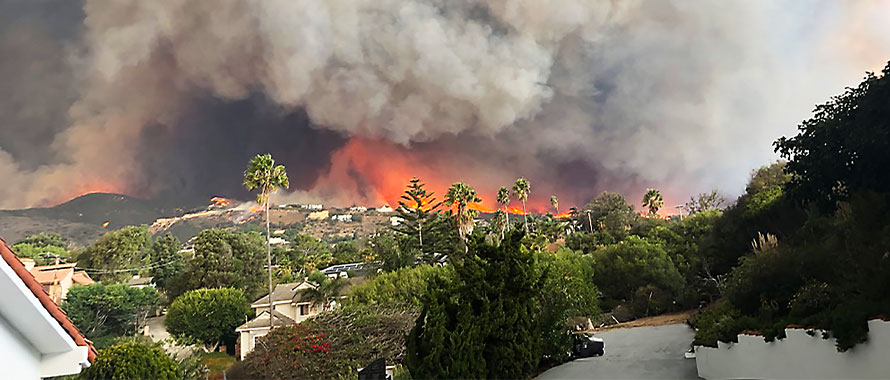
Many Los Angeles wildfire survivors remain unable to rebuild their homes after discovering that their insurance limits fall short of current reconstruction costs, Bloomberg recently reported. More than a year after the Palisades and Eaton fires destroyed about 13,000 residential properties, less than a dozen homes have been rebuilt, according to the Associated Press.
It is a “tragic predicament” that is only expected to grow, Bloomberg reported, as data shows many homes do not carry Homeowners Insurance limits that will cover full rebuilding expenses. For example, an analysis following the Marshall Fire in Colorado found that 74% of affected homeowners were underinsured for the loss.
“We see this every time we have a catastrophe,” said Sylvia Ornelas, Associate Vice President, Director, Personal Insurance, Burns & Wilcox, Woodland Hills, California. “We are a year in from the Los Angeles wildfires and there are still plenty of individuals who are still waiting to return to the homes and stability they lost. No one wants to go through what these homeowners are experiencing right now. It is very sad.”
We are a year in from the Los Angeles wildfires and there are still plenty of individuals who are still waiting to return to the homes and stability they lost. No one wants to go through what these homeowners are experiencing right now. It is very sad.
The reality of widespread losses and possible coverage gaps is also influencing how high-value homes are built, bought, and insured. A January 2026 Architectural Digest report noted that luxury buyers are prioritizing safety and insurability as climate risk becomes a prime factor in purchasing decisions. More homeowners are seeking “resilience-ready” homes with features to help mitigate risks like fire and flood, sources told the publication.
“The increased emphasis on high-quality materials and prioritizing sustainability is a very positive development, and I strongly support this direction,” said Sarah Chandonnet, Director, Private Client, Burns & Wilcox, Farmington Hills, Michigan. “Leading luxury builders will continue to embrace this approach, and it is poised to become not just a trend, but the new industry standard.”
The growing risk of valuation gaps
Underinsurance is a significant concern across the U.S., where two-thirds of households may be at risk of underinsurance and just 30% of homeowners have increased their Homeowners Insurance coverage to keep up with rebuilding costs, Insurance Business reported in December. The rebuilding challenges in Southern California reflect a broader, long-standing problem that has been intensified by rising costs and more frequent disasters, Chandonnet said.
“Widespread underinsurance is not confined to California; it has been a nationwide issue for years,” she said. “The Palisades fire has helped expose the depth of the underinsurance problem, a reality that often only comes into focus after a significant loss — and one that is occurring more frequently than ever before.”
Widespread underinsurance is not confined to California; it has been a nationwide issue for years. The Palisades fire has helped expose the depth of the underinsurance problem, a reality that often only comes into focus after a significant loss — and one that is occurring more frequently than ever before.
Insurance pricing is another factor, Chandonnet said. “Price is often a determining factor, and many clients either underinsure their homes or are unaware of the appropriate replacement cost for the property they are purchasing. While selecting a lower rebuilding cost can reduce the insurance premium, it ultimately leaves the homeowner vulnerable to significant financial risk.”
Inaccurate valuations often begin at the policy’s inception and may persist for years without review, Ornelas said. “We frequently find that replacement cost values are underestimated at the time of application. Once we do an inspection, we often determine the actual rebuild cost is quite a bit higher,” she said.
We frequently find that replacement cost values are underestimated at the time of application. Once we do an inspection, we often determine the actual rebuild cost is quite a bit higher.
Many valuation tools rely on homeowner-provided data, making the results “only as good as what you put in,” Ornelas said. “If you leave outdated materials in the system, it will return a lower replacement cost. Policies continue to renew for years, and those limits only increase slightly per inflation. The limit never catches up to the true replacement value. That is what leads to underinsurance.”
Rising costs, post-disaster demand complicate recovery
According to the National Association of Home Builders’ Cost of Construction Survey, construction costs made up 64.4% of the average new home’s sale price in 2024 — a record high and an increase from 60.8% in 2022. The association reported in January that the price of residential building materials remained elevated at the end of 2025.
Coverage gaps can be further widened by spikes in demand for contractors and materials following a wildfire. When a natural disaster occurs, contractors often increase their fees due to demand, Ornelas said. “That supply-and-demand effect is something we really cannot account for ahead of time,” she said.
When purchasing or renewing Homeowners Insurance, inspections and valuation reviews are imperative. “We do the due diligence to ensure we are properly insuring these homes,” Ornelas said. “We are sending an inspector to the property to see the home’s actual materials and build quality to determine the correct replacement cost.”
Insurance professionals should meet with their clients “routinely,” Chandonnet said, to talk through limits, endorsements, and any changes to the home. “When insuring a luxury property in a catastrophe-prone region, cost should not be the primary consideration. The focus must be on securing the appropriate level of coverage,” she said.
When insuring a luxury property in a catastrophe-prone region, cost should not be the primary consideration. The focus must be on securing the appropriate level of coverage.
After a replacement cost value is determined, homeowners can ask for a copy and review this data directly, Ornelas suggested. “If you see errors, you can correct them before there is a loss.”
Risk mitigation and bundling coverage
According to the recent Architectural Digest article, more clients in the high-value marketplace are focusing on proactive mitigation and investing in fire-resistant upgrades, and some buyers are hiring project managers to “conduct private due diligence” on things like slope stability and fire exposure before making a purchase.
“Closed eaves and ember-resistant venting are becoming increasingly common,” Chandonnet noted, adding that some clients have even been willing to construct an on-site fire station. “It is essential for clients to understand what proactive risk mitigation entails, the level of investment required, and how these measures influence their insurability,” she said. “If you are purchasing a home within 1,000 feet of brush, defensible space is critical. Roofing materials matter. Strategic, fire-resistant landscaping matters.”
These risk-reduction upgrades, which are gaining traction among new construction homebuilders, are a key factor in insurability, Ornelas said. A previous client in Pacific Palisades, for example, had trouble finding insurance before installing fire-resilient upgrades. “The owner made every wildfire mitigation effort possible, and we were able to insure it,” she said. “That house survived the Palisades fire. It is standing.”
Many high-value homes benefit from layered insurance coverage solutions, which may be bundled as a coordinated set of policies including Homeowners Insurance, a Personal Articles Floater for high-value collections, Personal Umbrella Insurance to address individual liability, Flood Insurance, and more. In California, where some homeowners must rely on the FAIR Plan for basic wildfire coverage, Wrap policies are increasingly utilized, Chandonnet said.
“We add additional coverages that the FAIR Plan may not include, like water backup and mold. Our exclusive Wrap policy also includes Wildfire Defense Systems coverage,” which provides wildfire monitoring, loss prevention, and response services, she said. “Writing all of the policies with the same insurance advisor is the best way to go about it based on knowledge of the account and from a claims handling perspective.”
Understanding coverage and risk mitigation options is all part of protecting “your memories and what you have worked your whole life for,” Ornelas said. “This is your home and your livelihood,” she said. “You do not want to lose your home and still be displaced a year later.”