

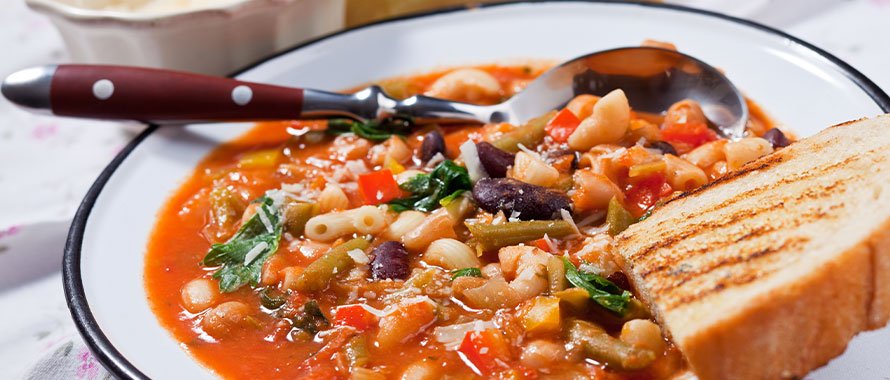
A man is taking legal action against the popular restaurant chain Olive Garden after alleging that he found a rat’s foot in a spoonful of his minestrone soup during a March visit to the eatery’s Warren, Michigan, location. According to the lawsuit, the foot injured the inside of the diner’s mouth and caused him to get physically ill.
Featured Solutions
While the allegation is highly unusual, restaurants generally have quality control measures in place to help prevent contamination incidents and maintain food safety standards.
Legal defense, payouts and other costs associated with this type of lawsuit could be covered by a restaurant’s Commercial General Liability (CGL) Insurance, which is designed to address third-party bodily injuries and property damage. However, it is important to ask about coverage for emotional distress, as mental anguish is not necessarily included in the definition of bodily injury in all insurance policies.
For restaurants, no way to prevent allegations of wrongdoing
According to the Detroit Free Press, a health department visit to the Olive Garden involved in the alleged rat-claw incident revealed no sign of rodents in the building, and an Olive Garden spokesperson told the newspaper that they have “no reason to believe there is any validity” to the claim. The rat’s foot that the customer said was found in his soup showed “no signs” that it was cooked and did not take on the red color of the minestrone soup, Olive Garden parent company Darden Restaurants added in a statement, and the foot was “significantly larger” than their soup spoons.
While incidents like this are rare, restaurants cannot fully prevent allegations of contamination or wrongdoing once food leaves the kitchen and is served to customers or prepared for takeout. In today’s highly litigious environment, businesses can face claims regardless of whether the allegations are ultimately substantiated.
Some allegations of food contamination have turned out to be false, including an infamous 2005 case in which a Wendy’s customer claimed to find a human finger in her chili but later was found to have planted it there and eventually served four years in prison for the scam, according to NBC Bay Area. The ordeal was linked to an estimated $21 million in lost business revenue for the company, the outlet reported in 2010. Still, contamination incidents are not entirely uncommon. In June, an employee at Sonic Drive-In was arrested after police said his bag of cocaine was found in a customer’s hot dog, KATV reported. In 2022, a family in California filed a lawsuit seeking $200,000 in damages from Costco after purchasing halibut that they said contained live worms that were crawling in the product after it was cooked, City News Service reported in March of last year.
When a restaurant faces a lawsuit over this type of allegation, its CGL Insurance would typically respond immediately by providing defense coverage. As long as the claim potentially falls within covered losses under the policy, insurers generally have a duty to defend and potentially indemnify the insured, even if the allegations later prove to be unfounded.
Business owners seeking CGL Insurance should also carefully consider the cost of legal defense when reviewing their coverage options, as litigation expenses can escalate quickly. Many restaurants may also want to consider Excess Liability Insurance to supplement primary CGL Insurance limits and help address high-severity claims that could potentially reach into the millions of dollars.
Insurance policy’s definition of ‘bodily injury’ may vary
Proving mental anguish without proof of a physical injury can be a challenge, and restaurants generally face a greater risk of these allegations after other types of incidents, such as foodborne illnesses, slip-and-fall accidents or physical altercations. For example, in a lawsuit recently filed against a sushi restaurant in Bozeman, Montana, over a food poisoning outbreak that sickened 40 individuals, at least one of the customers seeks damages for both physical and mental pain, emotional distress and anxiety, loss of enjoyment, and more, the Bozeman Daily Chronicle reported on May 11.
Mental anguish is a bigger concern when someone can prove some negligence for bodily injury. For example, if there was a fight or altercation at a bar, not only would a person potentially get injured but they could also claim more substantial mental anguish injuries than someone who accidentally eats something.
Coverage under CGL Insurance for mental anguish could depend on the definition of “bodily injury” in the restaurant’s policy.
Restaurant owners and operators should ensure their policies clearly contemplate both physical injury and mental anguish claims when evaluating coverage.
If mental anguish is not specifically addressed in the policy, some business owners may request to have it added as a way to avoid ambiguity and for peace of mind. While the enforcement of a mental anguish lawsuits vary from state to state, more than likely the claim would be covered, even if it is not explicitly in the definition of bodily injury.
The same consideration applies to Excess Liability Insurance policies, which often contain their own forms and policy language. Businesses should work closely with knowledgeable insurance professionals to fully understand how their policies would respond in the event of a covered loss.
How restaurants can protect customers, reputation
Most restaurant owners carry CGL Insurance for their business, along with other policies such as Liquor Liability Insurance and Commercial Property Insurance. If a food contamination issue is eventually linked back to a supplier, that company’s Products Liability Insurance and Product Recall Insurance policies may also come into play.
Although a business’s CGL Insurance may cover defense or even pay out a claim, the insurance carrier could later subrogate against a supplier or other entity that is found to be ultimately responsible for the incident.
While food contamination allegations may not be completely preventable, a strong risk management program is important for any establishment.
Some insurance carriers offer risk management professionals to assist businesses with identifying and mitigating exposures. These services can also be hired privately and may help businesses demonstrate proactive safety efforts that could positively impact insurance costs. Working with a specialized Hospitality Insurance broker can also help restaurants better evaluate coverage options and risk management strategies.
How a restaurant responds to an allegation is also crucial. Larger restaurant chains, in particular, benefit from addressing allegations swiftly and fairly while also taking steps to prevent similar incidents in the future. With consumers dining out and ordering takeout more frequently, a single incident can significantly damage a company’s reputation.
Future coverage is also a concern. Carriers will want to know what steps the restaurant is taking to prevent similar situations. If contamination issues become a recurrent problem, the restaurant could have more difficulty obtaining or renewing their CGL Insurance.