
Inside This Article:
- Nearly 3.85 million BowFlex adjustable dumbbells are being recalled after reports that the weight plates can detach during use, causing injuries.
- Of the 337 incident reports, at least 111 injuries have occurred, including concussions, broken toes, and contusions, according to the Consumer Product Safety Commission. ‘
- The recall could trigger product liability claims against Johnson Health Tech Trading, owner of the BowFlex brand, which could be covered by Product Liability Insurance.
- As claim costs increase, businesses that manufacture, distribute, or sell certain products may face increased scrutiny from insurers.
- Such claims can be devastating to a company, especially a smaller operator.
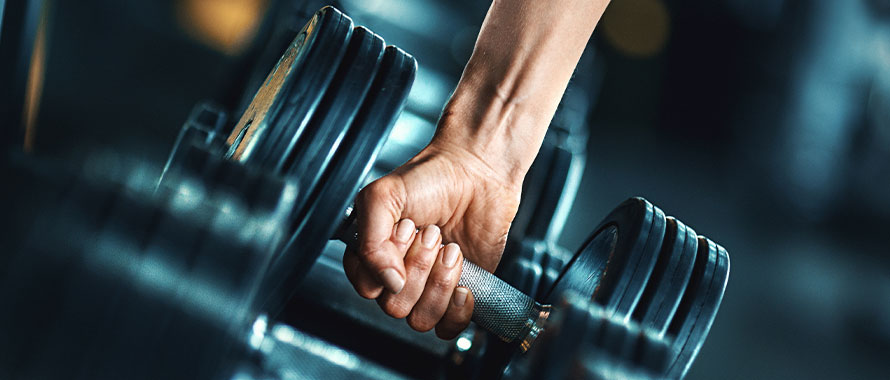
More than 3.8 million BowFlex adjustable dumbbells have been recalled after hundreds of reports of the weight plates detaching during use, causing injuries. The recall affects the BowFlex 552 52.5-pound and 1090 90-pound models, which were sold nationwide, PennLive recently reported. According to the U.S. Consumer Product Safety Commission, the plates can unexpectedly separate from the handle, posing a serious risk.
Manufacturer Johnson Health Tech Trading of Wisconsin has received 337 incident reports, including 111 injuries such as concussions, broken toes, contusions, and abrasions. Customers are advised to stop using the dumbbells immediately and to contact the company for a refund and a free one-year digital fitness membership.
The recall is “not overly surprising,” said Saad Ali, Associate Broking Commercial Manager, Commercial Insurance, Ontario Division, Burns & Wilcox, Ottawa, Ontario. “These types of claims are becoming more common given the shifts in both consumer expectations and awareness and the broader regulatory landscape.”
In addition to the costs associated with recalling the dumbbells, which can be covered by Product Recall Insurance, a manufacturer’s Product Liability Insurance can respond to legal claims against the company related to customer injuries, including attorney fees, medical expenses, settlements, and more. At least one BowFlex buyer has already filed a lawsuit, according to Law360.
BowFlex is a brand with significant name recognition, and its products are popular and expected to be safe. Multiple reports of incidents like these underscore the need for manufacturers to take action. The resulting costs could be substantial, highlighting the importance of Product Liability Insurance.
Class-action lawsuit likely
Lawsuits involving recalled products — and even those that have not been recalled — are on the rise, according to a May article in In Compliance Magazine. This includes a recent trend in class-action lawsuits in which consumers allege manufacturers provided inadequate remedies to product issues, resulting in economic losses to the consumer, the publication reported.
Class-action settlement amounts have also escalated in recent years, according to corporate defense firm Duane Morris’ 2025 Class Action Review. In 2024, 10 class-action lawsuits settled for $1 billion or more, and the top class-action settlements totaled more than $40 billion for the third year in a row, the report noted.
The recent dumbbell recall could lead to a class-action lawsuit due to the number of incident reports and customer injuries. Manufacturers, distributors, and retailers may all be named in these lawsuits, meaning each entity should carry its own Product Liability Insurance.
Even if a manufacturer, distributor, or retailer is named in a lawsuit but is ultimately found not responsible, the company may still incur defense costs until the case is resolved by judgment or dismissal.
Product Liability Insurance is “imperative” for these businesses, Ali explained. “The intent of a Product Liability Insurance policy is to cover the risk associated with a business being held responsible for injuries or damages caused by its products due to potential design defects or manufacturing defects,” he said.
While Commercial General Liability (CGL) Insurance can extend to a company’s completed operations, Ali said, “it is best to consult an insurance professional to review terms, conditions, and wordings, as some CGL Insurance policies could limit or eliminate coverage for product liability claims.”
Financial and reputational consequences
A rise in product recalls has been linked to stronger consumer protection regulations, the globalization of supply chains, and other factors, according to the Insurance Information Institute. Recalls can be “financially devastating” to companies and may even put them out of business, the institute reported.
Technology and evolving consumer expectations are also factors in the increase of product recalls, Ali said. “For manufacturers and distributors, a product recall can cause operational disruptions, not to mention huge financial and reputational consequences,” he said.
Product Recall Insurance would typically help cover expenses such as removing recalled products from stores, disposing of the product, and notifying customers, Ali said. “It can also cover indirect costs including lost sales, legal fees, and reputational damage,” he said, noting that the cost of the dumbbell recall could easily reach millions of dollars.
Recalling a heavy piece of fitness equipment that has been sold widely could be complicated. Product Recall Insurance is designed to protect companies from financial losses resulting from product recalls, which can potentially lead to bankruptcy. These losses can be particularly devastating for businesses that rely heavily on a single product and could even force a company to close.
A company selling dumbbells would not typically be a difficult risk to place. However, securing coverage can become more challenging following a recall claim. An insurance carrier may exclude the affected product from coverage or require details about the claim and how it was handled before agreeing to provide insurance.
When seeking Product Liability Insurance and Product Recall Insurance, companies may be asked about the type of products they offer and any recalls they have faced in the past. Certain products, such as aerospace components and critical parts on automobiles, may be more difficult to insure.
Recall risk to manufacturers growing
Product liability claims and recalls present greater challenges than ever for manufacturers and distributors.
Product liability claims have become increasingly expensive over the years, with rising costs of goods and living expenses contributing to higher claim costs. The financial impact of a product recall can be especially significant for smaller organizations.
Many companies may believe that they are unlikely to face a product liability claim, Ali said. “They think, ‘It will never happen to us,’” he said. “However, product recalls happen almost daily all over the world.”
Retailers that sell defective products can also be held liable. In some cases, liability may depend on how the retailer responded after receiving reports of injuries.
Retailers that are notified of injuries but fail to voluntarily remove defective products from their shelves may face additional liability exposure alongside manufacturers and distributors. Because these businesses share product liability risks, each should carry its own Product Liability Insurance.